
Is America’s Moral Compass Broken…?
Is America’s Moral Compass Broken — or Has It Been Deliberately Recalibrated?
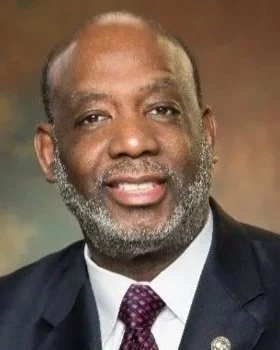
By Forrest E. Harris, Sr.
There are moments in a nation’s life when the question is no longer where are we headed? But who decided this was the direction?
The killing of Renée Nicole Good, a 37-year-old mother of three, by an ICE officer in Minneapolis—and the swift arrest of civil rights attorney Nekima Levy Armstrong for raising a moral question during a worship service—force such a reckoning.
Is America’s moral compass merely confused, or has it been recalibrated away from justice altogether? I ask this not as a partisan observer nor on behalf of any organization, but as a pastor, theologian, and educator who has spent decades shaping leaders for moral responsibility in public life. I write because silence, at moments like this, is itself a moral decision.
Arrested for a Question
Nekima Levy Armstrong was arrested after questioning what she rightly named a fundamental moral conflict: how can one shepherd a congregation while serving as an agent of an enforcement system whose actions have terrorized communities and taken lives? Her words were not violent. Her protest was not armed. Her question was moral. Yet the machinery of the state and the Justice Department moved swiftly to arrest her for disrupting a worship service.
By contrast, the death of Renée Good—shot by an ICE officer—has not triggered a comprehensive state and federal investigation. Officials quickly labeled her actions “domestic terrorism.” The officer’s account was accepted. The case is all but effectively closed.
This contrast should trouble the moral conscience of the nation and people of faith. When a nation mobilizes law enforcement to arrest a woman for raising a moral question as disrupting a worship service—but refuses to fully investigate the killing of Renee Good by armed federal agents—we are not witnessing neutrality. We are witnessing moral inversion.
The Selective Sacredness of Space
Much has been said about the sanctity of worship spaces. As a former pastor, I understand that concern. But history teaches us that sanctuaries have never been morally neutral spaces. They either sheltered the prophets or protected Pharaoh.
Jesus himself disrupted worship when religion aligned itself with exploitation. He overturned tables not because he despised the temple, but because he valued justice above religious decorum.
To claim that raising a moral question in church is more offensive than killing a mother without a transparent investigation is to confuse order with righteousness. Scripture warns us against this confusion. “Woe to those who call evil good and good evil,” says the prophet, Isaiah.
King, Birmingham, and the Cost of Moral Blindness
It is no small irony that these events are unfolding as the nation publicly celebrates Martin Luther King, Jr. We quote him, parade him, and canonize him—while quietly forgetting the sharp edge of his moral critique.
King’s Letter from a Birmingham Jail was not written to segregationists alone. It was addressed to white clergy—pastors and religious leaders whose moral vision had been blurred not by hatred, but by an overcommitment to “order,” “civility,” and a selective reverence for the law.
King warned that the greatest threat to justice was not open extremism, but the preference for negative peace—the absence of tension—over positive peace—the presence of justice. He insisted that unjust laws must be exposed, resisted, and disrupted. Otherwise, violence would eventually fill the vacuum left by moral cowardice.
History bears him out.
A broken moral compass did not merely permit the bombing of the Sixteenth Street Baptist Church in Birmingham—it made it possible. When moral clarity is sacrificed on the altar of order, when the church confuses reverence for space with reverence for justice, when protest is criminalized while violence goes unexamined, children die. Communities are fractured, and fear metastasizes.
The tables of moral conscience must be overturned—not out of disrespect for worship, but out of reverence for life.
That is what Nekima Levy Armstrong was doing.
She was not desecrating sacred space; she was calling it back to its purpose. She was standing squarely in the tradition of prophetic disruption that King embodied, that the Black church has long carried, and that Jesus himself enacted when religion aligned itself with domination rather than liberation.
Law, Power, and the Weaponization of Order
The threatened use of the FACE Act in this case exposes another fault line. A law designed to protect vulnerable people from intimidation is now being repurposed to silence dissent—while the same administration critiques its prior use as “weaponization.”
Meanwhile, ICE agents enter homes without warrants, deploy tear gas near families with children, and escalate encounters with communities already traumatized by state violence. Federal courts suspend protections against retaliation. Officials warn protesters, “Gas is coming,” as though intimidation itself were public service.
One must ask: Who is being protected—and from whom?
A Five-Year-Old Detention: When Decency Loses Its Voice
And if we need further evidence that something has gone terribly wrong, consider what has also been reported from the Minneapolis area: a five-year-old boy was detained by federal agents along with his father after returning home from preschool, with officials saying the child was used “essentially…as bait” to apprehend the father.
According to the report, the child and father were transported to a detention facility in Texas. School officials asked aloud what any moral person should ask: “Why detain a 5-year-old in a life-long trauma?”
This is what a broken moral compass looks like in practice—not only the harshness of policy, but the erosion of moral hesitation. A system can be so determined to prove its legal power that it stops asking the most basic human question: What are we doing to children?
This is not the law applied evenly. It is the law applied downward.
Southbound Morality
A compass that points true north orients a nation toward dignity, accountability, and restraint. A compass that points south—toward domination—reveals something else: fear has replaced moral imagination.
What we are witnessing is perilously close to authoritarianism of false righteousness, the belief that order must be enforced even when truth is inconvenient, and that power need not explain itself to the people it governs.
That is not justice. That is intimidation clothed in legal language.
Recalibrating the Moral Compass
The Black church tradition that shaped my moral compass has long understood that law and justice are not the same thing. From slave patrols to Jim Crow to mass incarceration, history has taught us that legality can coexist comfortably with cruelty.
That is why moral witness matters.
If churches cannot tolerate prophetic questions in their midst, if the state cannot tolerate peaceful dissent, and if the death of a mother does not warrant the fullest investigation, then the problem is not disorder in the streets.
The problem is the disorder in the nation's moral soul.
The question before us is not simply whether America has a border. Is America still a nation with a conscience, or has it lost its sense of humanity?
And if that conscience has gone silent, the responsibility of the U.S. Congress, faith leaders, educators, and citizens is not to whisper—but to speak.
Because a broken compass does not correct itself.
It must be recalibrated—by truth, by courage, and by a love of justice that refuses to be intimidated.
Forrest Harris Sr. is a theological professor, former pastor, and president emeritus of American Baptist College in Nashville, where he has spent decades forming faith leaders committed to justice and public responsibility.
